The words left unsaid.

For three decades, I sat across the table from parents planning for the future of their child with an intellectual or developmental disability — a child who would always need a parent, and someday someone else, to step in for their care and protection.

Again and again, I saw the same pattern: parents were not only planning for their child's future. They were confronting the disappearance of their own.

But the field rarely said that out loud. Its official story did not match what families were actually living.

That is beginning to change. Parents are naming what was hidden. Practitioners are questioning old assumptions. A new understanding of this work is emerging.

This publication is about the words left unsaid — the truths parents lived for decades, the failures of an industry that did not name them, and the shift now underway.

Articles

This is not a scheduled publication. Pieces are written when there is something to say.

The Silo Problem Is Not the Problem

The IDD field organized its services into silos and spent decades trying to connect them. The connection was never the problem — no silo held the whole person. Only the parent did.

What Planning Is Actually For

The IDD field has been planning for the wrong event — preparing families for the parent's absence when what was needed was the reduction of the parent's irreplaceability while she was still present.

Succession Was the Wrong Frame

The IDD field borrowed "succession" from trusts and estates law and built its long-term planning around a word that named the wrong moment. What families actually live is a transition.

The Parent Is Not the Plan

The IDD field built its planning instruments around a single unspoken assumption — that the parent would always be there. This essay names what the field never did: the parent was the plan.
All articles by topic →

What the publication is about

Across thirty years of practice, the same patterns appeared in case after case. Five of them are named below. Each names something the field has built itself around without examining — and each is a place where what I watched did not match what the field said was happening. They are the publication's beat. They will be developed in pieces over time.

Transition Planning, Not Succession Planning

Succession is a legal-financial concept: it treats caregiving as a unit of authority transferred at an event. But the families I worked with were not living an event. They were living a transition — a set of functions handed off gradually across a lifetime. The industry built itself around succession. The families who needed help were living something the field was not built to see.

The Convenient Myths

Three myths the industry and the broader culture propagate, each of which harms parents while appearing to honor them: the parent as selfless hero, the parent as primary caregiver, the parent as forever caregiver. What I saw, repeatedly, was the cost of those myths to the people being flattered by them. The honest version: the parent is a parent, doing what is best for their child with the tools they were handed.

The Silo Problem

Silos are permanent structural features of the IDD service ecosystem, not defects waiting to be repaired. Interoperability efforts and care-coordination platforms have not bridged them and, in absorbing the field's attention, have served as active blockers. What works is portable knowledge — knowledge that belongs to the family and moves with the child, rather than records that belong to systems and stay where the systems keep them.

Transitional Autonomy

Autonomy is not a capacity the person with IDD does or does not possess. It is a gradual, parallel arc that both parent and child move along — the child developing self-direction at whatever pace and in whatever form their profile allows, the parent reclaiming a life that exists outside the primary-caregiver role. In thirty years of practice, it looked like something specific. The field's binary of competent-or-not does not describe it.

The Parent's Wellbeing

The parent's wellbeing matters as much as the child's. This is a direct refutation of the unstated premise the field operates on — that the parent is an instrument in service of the child, to be supported only insofar as support helps the parent keep serving. The premise is wrong. Saying so plainly is part of what the publication is for.

About the author

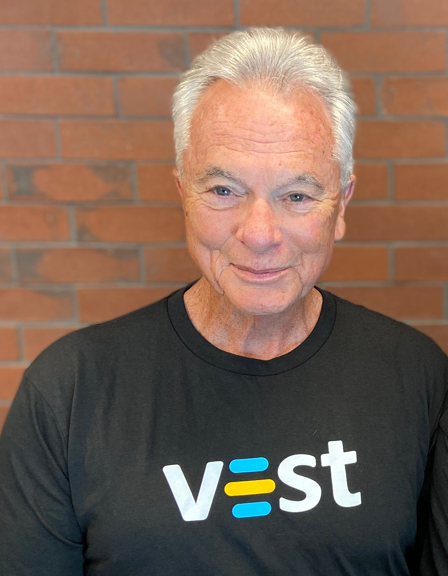
Photograph of Michael Pearce, author of the publication.

Michael Pearce sat across the table from families at the hardest decisions of their long-term planning, in case after case, for thirty years. The patterns that repeated, the places where the field's tools did not fit what the families were actually living, the words that were never said plainly enough — that is the source of the writing here.

He is a California-licensed attorney on Inactive Status with the State Bar of California (Bar No. 145481, admitted 1989). For three decades his practice was in estate planning, special needs trust planning, trust administration, probate, and — at the center of the work — conservatorships for adults with intellectual and developmental disabilities. That practice is the vantage point.

He is not a parent of a child with a disability. His standing is the practitioner's.

The practice ended. The work did not.

The publication is what those decades produced once the patterns that had been visible in case after case became something that could be set down in plain language for the people who needed it.

He is the founder of Tenerra, Inc., the company building ANYA — a system designed around the recognition that what parents know about their children does not live in records, and that the field has built itself as if it did. He is the originator of the Human Continuity Operating System (HCOS) — the architectural framing that locates the problem of long-term care for people with IDD in continuity of knowledge rather than continuity of authority — and the creator of the SHIFT Care Transition Plan methodology.

The site you are reading is the publication. It is not a law practice site. Michael does not provide legal advice and is not available to take on legal matters. Families looking for legal assistance can be referred to attorneys whose practices remain active.

Contact

For correspondence about the publication — questions, responses to specific pieces, requests for republication — email michael@pearcelaw.net.

For families seeking legal assistance with conservatorship, special needs trust planning, or estate planning matters: Michael is on Inactive Status with the State Bar and is not able to provide legal services. He is glad to refer to trusted attorneys who can.